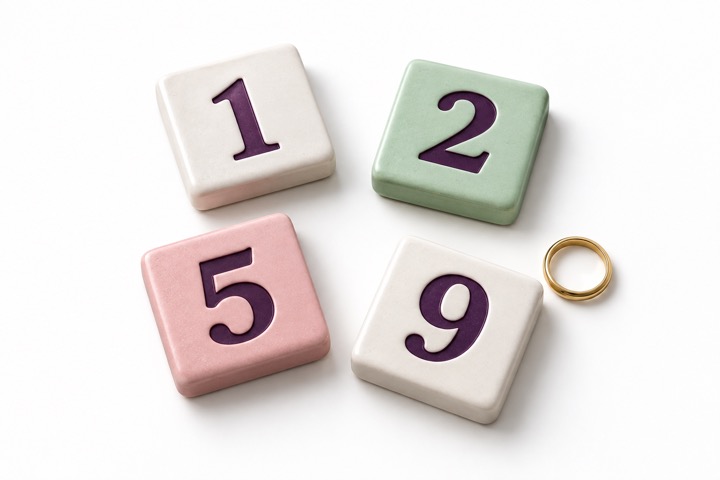
Number puzzles do not need advanced mathematics. Many casual number games are built around order, position, comparison, and careful scanning rather than calculation.
A short warmup can help you settle into that kind of thinking. It gives you one clear rule, a small set of numbers, and an ending you can reach in a few minutes.
Puzzlepia’s Daily Number Puzzle is one example: find the numbers from 1 to 16 in order.
Begin with ascending order
The simplest number warmup is to arrange a small group from lowest to highest.
Try this set:
4, 1, 5, 2, 3
The correct order is 1, 2, 3, 4, 5.
This task is easy to explain, but it still asks your eyes to move between positions and keep track of the next target.
You can make the warmup slightly harder by using more numbers or placing them in a grid instead of a row.
Scan before tapping
In a number-order grid, it is tempting to search for only the next number. A broader first scan can make the sequence feel smoother.
Look across the full board and notice where a few early numbers are located. You do not need to memorize every position. Simply seeing 1, 2, and 3 before you begin can reduce hesitation.
After each correct tap, return your attention to the next target. The status message in Daily Number Puzzle keeps that target visible.
Try a missing-number prompt
Missing-number puzzles are another gentle warmup.
Consider:
2, 4, 6, _, 10
The missing number is 8 because the sequence increases by two.
The goal is not to solve a complex formula. It is to notice a simple pattern and confirm that the answer fits.
For a change, try Two Number Patterns. One question alternates two jumps; the other hides a rising track and a falling track in the same line. Keep the second question for another break, or open its hint only after you have tried splitting the line.
Separate speed from accuracy
A warmup does not need a timer.
Moving quickly can be fun, but accuracy gives the puzzle its structure. If you tap the wrong number, pause, check the visible target, and continue. A gentle error should not end the session.
This keeps number play comfortable for beginners and casual players. The puzzle remains a small focus exercise rather than a performance test.
Recover without starting over
In Puzzlepia’s Number Puzzle, a wrong tap leaves your completed tiles in place. The message tells you which value to find next. You do not need to press Reset unless you want a fresh attempt.
Try the Number Order Challenge on Layout 4. After completing 1 through 5, it asks what happens when 7 is tapped before 6. A labeled board and optional explanation show the next three positions, and a fixed link opens the same layout for practice.
On a later break, revisit that link and scan for 6 before playing. The board starts fresh, without saved progress, and there is no speed target. The useful habit is checking the next value rather than treating one wrong tap as a failed puzzle.
Use rows and columns
When numbers are scattered in a grid, choose a scanning method.
You can read each row from left to right, move down one row at a time, or scan columns from top to bottom. If the number is not found, switch direction.
A consistent scan is usually easier than moving your eyes randomly around the board. The same idea also helps in word searches and color matching puzzles.
Move from order to Sudoku
Once a number-order warmup feels comfortable, a small Sudoku session can offer a different kind of number logic.
Sudoku uses placement and elimination rather than arithmetic. The digits act as symbols that must fit rows, columns, and boxes without repetition.
For a related daily number puzzle, try DaySudoku. It offers one free daily Sudoku puzzle with a Key9 twist: find the Key9 first, then continue the full Sudoku.
Puzzlepia links to DaySudoku as a related external daily puzzle site. No Puzzlepia account is required for the local starter puzzles.
Keep the warmup short
Daily Number Puzzle has seven fixed layouts. Its daily pick changes at 00:00 UTC and repeats weekly, but you can choose any layout without waiting. The rule stays the same: tap 1 through 16, wherever they appear.
For a change of position, open Layout 2. Find 1, 2 and 3 before you begin. Finish the board, reset it, then try scanning by columns instead of rows. Neither approach earns a score; choose the one that feels clear to you.
The fixed layout link can bring you back to the same arrangement next time. It does not save completed tiles, and reset keeps your current layout. These are practice boards, not a newly generated puzzle or a timed test each day.
A useful number routine can be simple:
- Order five numbers.
- Solve one missing-number pattern.
- Play the Daily Number Puzzle.
You can stop there or continue into another puzzle. The warmup has done its job once you feel focused and comfortable with the number patterns.
Try three short board exercises
Put the scanning ideas into practice with three optional rounds. Each shows an actual fixed game layout, keeps hints and answers closed until you choose them, and links to that same playable board.
- Quick Number Focus uses Layout 1 to locate the first four numbers.
- Number Order: 1 to 10 uses Layout 2 to follow the change from one digit to two.
- Find the Final Four Numbers uses Layout 7 to plan the finish after 12.
Choose one question now and leave another for your next break. The diagrams are reading exercises, while each game link starts a fresh full board at 1. Neither the course nor the game records your progress. You can bookmark a round to find the same question again.
For a different kind of scan, find consecutive neighbors on two fixed boards. Each round has one pair that shares an edge and differs by 1.
Try Mini Sum Grids when you want to add instead of tap in order. Start with a row that has just one blank, or keep the round with two blanks in every line for a later break.
In Mini Balance Puzzles, use the two sides of a scale to work out what each shape weighs. Try the matching stars first, then keep the three-shape round for your next break.
Choose clarity over difficulty
Harder is not always better, especially at the beginning of a short break.
A clear puzzle with a visible next step is easy to return to. Over time, you can add larger grids or different rules, but the basic routine should remain welcoming.
Number puzzle warmups work well because the goal can be small and exact. Find the next number, confirm the pattern, and enjoy a clean finish.