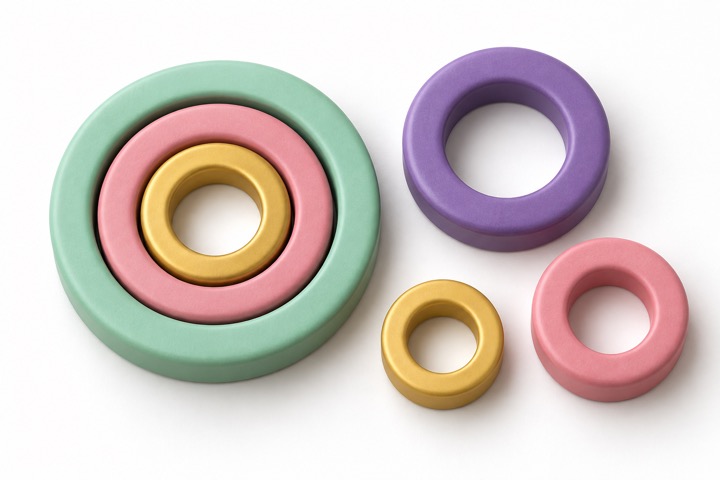
Color puzzles are satisfying because they are easy to read at a glance. A group of matching colors stands out. A clear line feels good. A board that was mixed and messy can suddenly become organized.
That visual clarity is part of the appeal. You do not need a long explanation to understand that matching colors belong together.
Still, simple strategy can make color puzzles more enjoyable. Whether you are clearing a target color, placing rings, or looking for groups, a few small habits can help.
Puzzlepia has a playable Daily Color Match and Daily Ring Puzzle for quick practice.
Look for groups first
In many color puzzles, groups matter more than single pieces. Before you tap or place anything, scan the board for clusters.
A cluster is a group of nearby cells or pieces that share a color. It might be two pink tiles side by side, three mint rings in a line, or several matching pieces near a corner.
Groups are useful because they create direction. If a color already has a strong area, you may want to build around it. If a color is scattered, you may want to wait before committing to that part of the board.
The goal is not to solve everything instantly. The goal is to notice where the board is already helping you.
Plan around limited space
The rule matters more than the shape of a group. In Puzzlepia’s Daily Color Match, a matching tile can be anywhere on the board. You do not need adjacent targets or a line. The Ring starter instead asks you to place all its tray rings into compatible sizes; it does not require a color line either. Check the goal before applying a strategy from another game.
Color puzzles often look relaxed, but space still matters.
If you place pieces without thinking about the board shape, you can block future matches. This is especially true in ring-style puzzles where one cell may hold different sizes. A cell can look available, but still be wrong for the piece you need later.
Before making a move, ask what space will remain. Does the move create a better color group? Does it keep room open for other sizes or colors? Does it make the board easier to scan?
Good color puzzle play is not only about matching. It is also about keeping the board flexible.
Use color as a guide, not a rush
Bright matching colors are tempting. When you see a possible match, it is natural to take it right away.
Sometimes that is correct. A clear match can simplify the board and give you momentum.
But other times, waiting is stronger. If a match is already safe, you may be able to improve it by placing one more piece nearby. Or you may need to use another color first to avoid blocking space.
Color is a guide. It shows possibilities. It does not always mean you must act immediately.
Watch the edges
Edges and corners can be both helpful and limiting.
They are helpful because they frame the board. A piece placed along an edge has fewer neighboring spaces to consider, which can make the board feel cleaner.
They are limiting because pieces at the edge have fewer ways to connect. If you place too many unmatched colors along the border, you may make future matches harder.
Try to use edges for stable patterns, not random leftovers.
Try a different target, not a faster round
Daily Color Match now offers pink, mint, gold and purple targets on one fixed board. Read the color names on the tiles as well as their fills, then scan one row at a time. The board does not move while you play.
Start with a mint round or a gold round. Each has six targets. Purple has seven, but the goal stays the same: find every tile of that color, in any order. A wrong tap does not remove a tile or end the round.
After finishing, choose Try next color to start fresh, or keep the fixed target link for another break. Reset preserves your selected color and restores all tiles. There is no timer or saved progress, and these practice rounds do not change automatically each day.
Three short practice rounds
Want to look before tapping? These three reading exercises use the same board as Color Match, with optional hints and answers:
- Pink Color Match Challenge: scan row by row.
- Mint Color Match: notice a target separated from the rest.
- Color Match: Gold Target: check the middle and the edges.
Each exercise links straight to its matching playable target. Try one now and another during a later break. The board and questions stay fixed, so there is no deadline or daily streak to maintain.
For one more practice, Find Purple Past the Edges separates the outside edge from the middle. Try the same route in the game, then reverse it on a replay.
One of Each, Then All the Same gives the same board two different goals: find a 2x2 square with four colors, then find a square with just one. Leave the second round for a later break, or try its Purple target in the game.
Try a repeating pattern
Before another game, try Pattern Spotter: Repeated Colors for three short reading rounds. Compare a three-color cycle, paired colors and a block where Pink occurs twice. Color names accompany every tile, and hints and explanations stay closed until you choose them.
Use a round link to return to that same question during another break. These are fixed sequences, not changing daily boards or saved progress. Unlike Color Match, the task is to continue a repeating block; matching every tile of one color would answer a different question.
Mini Picture Grids turns a similar scan into a different puzzle: follow the row and column clues to decide which squares form a picture. Try one small grid now and keep the other for another break.
Mini Color Codes is about order rather than matching tiles. Use a pair of clues to find the three colors, then try a second code where all the colors are known but none starts in the right place.
Enjoy the visual reward
Color puzzles work well for short breaks because the feedback is immediate. A match looks like a match. A cleared group feels tidy. A completed line gives the board a small moment of order.
That visual satisfaction is not a small detail. It is one reason color puzzles can feel relaxing even when they require attention.
Puzzlepia’s Daily Color Match focuses on a very simple goal: find and clear a target color. The Daily Ring Puzzle adds size-based placement, which makes the board a little more strategic.
For related BornstarSoft game pages, explore Ringzzle and Mapdoku.
Start slowly. Look for groups, protect space, and let color guide your choices without rushing every match.